What happened in Srebrenica? Summary of the 2002 NIOD report

In 2002, the independent Dutch ‘NIOD Institute for War, Holocaust and Genocide Studies‘ published its report on the 1995 events in Srebrenica. It had been commissioned by the Dutch government in 1996. Its publication led to the downfall of the government led by Prime Minister Wim Kok.

The following is an authorized summary of the conclusions from the epilogue of the main report Srebrenica, a ‘safe’ area – Reconstruction, background, consequences and analyses of the fall of a safe area. The numbers in the left-hand margin refer to the numbered main points in the epilogue.

(1) The mass slaughter of thousands of Bosnian Muslims in Srebrenica is a horrifying and probably the most violent excess to take place in the process of disintegration of Yugoslavia in the first half of the 1990. Great-Serbian ambition played a major role in this process. This places a relatively large share of the responsibility with the Serb political leaders, especially former president Milosevic. The very large degree of responsibility for the violent nature of the process of disintegration borne by the Serb leaders should not encourage turning a blind eye to the responsibility of other leaders for the resort to violence. All of the warring factions were guilty of gross violence. The reports and images of this violence met with repugnance throughout Europe and provoked a strong call for intervention by the international community, in which the Netherlands figured prominently.

(2) International interventions are rarely so preventive that they can be made before excesses occur. If those excesses do occur, the public debate on them often leads governments to intervene on moral and humanitarian grounds. More in-depth analysis of the background of trouble spots and measures based on such analysis rarely play a major role. The actual intervention is more often a matter of trial and error than of the coherent implementation of a well-conceived programme. As a result, many processes of intervention look like ‘muddling on’. This was the case in Yugoslavia as it disintegrated. From lack of a better alternative, international intervention right from the right down to the aftermath of the fall of Srebrenica was dominated by the ‘muddling on’ scenario.

(2) The promise made by UN general Morillon in 1993 to the people of Srebrenica that they were under the protection of the UN and would not be abandoned fits in with this picture of muddling on. He hereby produced a fait accompli, which the Security Council turned into the decision to label Srebrenica as a ‘safe area’, a new and undefined concept. Nothing was clear about it except that the dominant light option ruled out a mandate for a genuine military defence of the area or its population. The presence of UN troops was intended rather to be a warning by the international community not to attack (“to deter by presence”). The proclamation of the zone as a safe area created an illusion of security for the population.

(3) The Netherlands was in the forefront of the international call for some form of intervention. In 1993 a combination of humanitarian motivation and political ambitions led the Dutch government, on its own initiative and without prior conditions, to make an Air Battalion available for the UNPROFOR mission in Bosnia. The Netherlands could use this to show its worth, and Dutch prestige would be enhanced in the world. This took place amid wide political and media support and without a proper analysis of the far-reaching consequences beforehand. These were among the factors which led to the Netherlands being destined for Srebrenica, which had been turned down by other countries with arguments to back up their refusal.

(3) In its desire to achieve a consensus, the Dutch parliament closely followed cabinet policy. Parliament and the parliamentary commissions were regularly given detailed information, sometimes behind closed doors. This strengthened the cabinet, but at the same time it seriously undermined the critical and regulatory role of parliament. Criticisms were voiced in politics and in the media – some of them were forcefully expressed by the military – but critics ran the risk of being disqualified by the rest for their lack of moral fibre.

(3) The decision to become one of the main suppliers of troops for a peace mission moved many at the time. Dutch politics were dominated by the call to intervene on moral grounds. This humanitarian motivation, coupled with the ambition to improve Dutch credibility and prestige in the world, led the Netherlands to offer to dispatch the Air Brigade. By playing down the possible risks of the behaviour of the warring parties so much, a large circle of those involved in this policy, and in particular its advocates, took on a large responsibility for it.
In practice, Dutchbat was dispatched:

– on a mission with a very unclear mandate
– to a zone described as a ‘safe area’ although there was no clear definition of what that meant
– to keep the peace where there was no peace
– without obtaining in-depth information from the Canadian predecessors in the enclave (Canbat)
– without adequate training for this specific task in those specific circumstances
virtually without military and political intelligence work to gauge the political and military intentions of the warring parties
– with misplaced confidence in the readiness to deploy air strikes if problems arose, and
without any clear strategy for leaving.

(4) Dutchbat arrived in 1994 in an enclave with extremely complicated relations, and it was badly prepared for the actual situation there. Apart from two exploratory parties, they made little attempt to obtain information from the Canadians, their predecessors, about their experiences. The Canadian government in Ottawa was not asked for information either. The preparation and training were sufficient, generally speaking, for the military aspect, but were inadequate as regards the provision of information and insight into the situation of the population, its cultural background and experiences during the civil war. This meant that stereotypes and prejudices could already take hold during the training. All this did little to ease the relation between Dutchbat and the population. There were relatively frequent contacts during Dutchbat I, but they gradually grew less. That contributed to an introverted mentality and a reinforcement of negatively coloured stereotypes. Dutchbat was often negative about the population in the enclave, but there was no question of a deliberate anti-Muslim attitude. Contrary to what has been suggested, Dutchbat III was not conspicuous for a relatively high level of misbehaviour.

(4) Minister Voorhoeve, who as director of the Clingendael Institute had been a fervent advocate of intervention in the early 1990s, remarked in the summer of 1994 that it was an impossible assignment. The battalions often had to carry out their work in a spirit of frustration and lack of motivation. Especially in the case of Dutchbat III it became shaken and introverted. But that does not mean that it was dysfunctional. It performed its task, but that came nowhere near the desired effect. This is more the fault of the inadequate resources and the policy of the UN and UNPROFOR. Dutchbat grew less and less able to carry out its task.

(5) UNPROFOR was caught between two fires. The supposed demilitarisation in the enclave was virtually a dead letter. The Bosnian army (ABiH) followed a deliberate strategy of using limited military actions to tie up a relatively large part of the manpower of the Bosnian Serbian army (VRS) to prevent it from heading in full force for the main area around Sarajevo. This was also done from the Srebrenica enclave. ABiH troops had no qualms about breaking all the rules in skirmishes with the VRS. They provoked fire by the Bosnian Serbs and then sought cover with a Dutchbat unit which then ran the risk of being caught between two fires. On the other hand, the VRS blockade policy was a significant contributor to a frustrating and demotivating situation. As a result, the strength of Dutchbat III had been depleted by one third by the beginning of July 1995 and there was a serious shortage of supplies, from food to diesel oil for the vehicles. The last two battalions in particular became mentally and physically exhausted in the course of their mission.

(5) With hindsight there are no indications that the increased activity of the VRS in East Bosnia at the beginning of July 1995 was aimed at anything more than a reduction of the safe area Srebrenica and an interception of the main road to Zepa. The plan of campaign was drawn up on 2 July. The attack commenced on 6 July. It was so successful and so little resistance was offered that it was decided late in the evening of 9 July to press on and to see whether it was possible to take over the entire enclave.

From a military perspective Dutchbat had few grounds for mounting a counterattack on its own initiative because:

– active defence of the enclave by military means was not in accordance with the mandate, the UN policy (the maintenance of impartiality) or the rules of engagement
– the instruction (“to deter by presence”) was for military reaction to be above all reticent
the military balance of power was such that, without outside support, Dutchbat would have been defenceless in a serious confrontation
– as a result of the ‘stranglehold strategy’ (the blockade policy of the VRS), Dutchbat III was no longer a fully operational battalion in terms of manpower, supplies or morale.
military means could only be deployed if the safety of the battalion was in danger and if it was the target of direct fire – the ‘smoking gun’ requirement – which the VRS deliberately avoided
– the circumstances, such as the failure of air support to materialise and the death of the Dutchbat member Van Renssen through an action by a Bosnian Muslim, hardly encouraged the mood for a counterattack on its own initiative.

5) The question of whether another battalion (in a different condition, or more heavily armed) would have acted differently is impossible to answer. In terms of political psychology, it was conceivable that, from fear of a negative reputation for the Bosnian Serbs, the commander of the Bosnian Serbian army (VRS), general Mladic, would have held back from armed resistance with the risk of victims on the UNPROFOR side. His decision to press on to Srebrenica was primarily motivated by the lack of any significant armed resistance. This indicates that such considerations did play a role with the VRS. Since action by Dutchbat on its own initiative contrary to the instructions was not an available option, the initiative for that would have had to come from one of the higher UN echelons. But those higher echelons were very reluctant to use close air support, let alone considering serious operations in the form of active fighting back by Dutchbat. Besides, the Bosnian Serbs deliberately avoided the ‘smoking gun’ by skirting the blocking positions and not giving UNPROFOR any direct pretext to initiate an armed counterattack on the ground. The attack on Srebrenica was characterised on a small scale by what characterised policy on a large scale: muddling on.

(6) The rapid fall of Srebrenica and the little resistance that was put up have led to questions and allegations about possible secret deals. The most important of these concerns the UN commander-in-chief general Janvier. It has been alleged that he and VRS general Mladic made a secret agreement on 4 June 1995 that no more air strikes (like those at Pale) would be forthcoming, not even in the future, in return for the release of mainly French hostages. This hypothesis does not stand up to criticism. Even without a deal, Mladic could still understand that the general conviction on the UN side was that air strikes were ruled out as long as there were hostages or the possibility of new ones. Attacks from the air had become extremely hazardous as long as the ground forces of UNPROFOR were still in the enclaves. That was why Janvier had already asked the Security Council to abandon the eastern enclaves to facilitate a stronger action.

(7) The expectation on the part of Dutchbat and the Sector North East in Tuzla that help would come from outside on the morning of 11 July in the form of massive air strikes was misguided. The UNPROFOR command had completely ruled out air strikes, but was also extremely reticent about lighter support from the air in the form of close air support. It hereby crushed the Dutchbat illusion and the enclave became an easy target for the VRS. On the Dutch side, the potential for the deployment of air support was overestimated. It was expected that “robust” action would be taken if necessary. That had been an important argument in the political and military decision-making right from the start. The UN was very reluctant to deploy the air force because it wanted to remain impartial in the conflict and to limit its task to that of peace-keeping, not peace-enforcement. The hostage crisis after the Pale air strikes had further increased doubts about the usefulness of massive air support.

(6) Fear for the fate of a group of members of Dutchbat held hostage elsewhere whose numbers had grown to 55, as well as for that of the refugees and members of Dutchbat in the enclave, who could also be regarded more or less as hostages, led Minister of Defence Voorhoeve to make an urgent appeal to the highest UN commander in the region, Akashi, to call off the requested air support on 11 July. This appeal had no effect whatsoever because the decision in question had already been taken. Akashi later falsely used Voorhoeve’s request in order to get out of having to say that the UN itself had not planned any further action. He appealed to Voorhoeve’s request by saying that it left him no alternative.

(8) The attack on the enclave, and in particular its complete collapse, came as a total surprise to Dutchbat and to all of the other parties involved. This can be explained from the lateness of the decision of the Bosnian Serbs to attack and eventually take over the whole enclave, but it was also due to the weak intelligence position of the UN and the lack of sufficient capacities and the right resources to collect and analyse intelligence. The fall of Srebrenica was thereby partly a failure of military intelligence. The Netherlands also played a part in this. The Cabinet, the Ministry of Defence and the Dutch Parliament adopted an anti-intelligence attitude. The Military Intelligence Service in particular did not receive sufficient extra resources to collect additional intelligence, and this service was not involved enough in the decision-making on Srebrenica. As a result, far fewer observational data were obtained than was technically possible. The United States had the strongest intelligence position in Bosnia. The Netherlands could have benefited from this, but lack of interest and the negative attitude of the military and political leadership stood in the way. The army top repeatedly turned down an offer by the CIA to smuggle a number of so-called Comint cases into the enclave with equipment to tap the communications of the ABiH and the VRS in the region. Defence thereby missed the opportunity to strengthen its own information position in the field of intelligence in return. The result was a weak Dutch information position in the field of intelligence. Tapped messages would at least have given Dutchbat ‘ears’, and would have put the army in a strong position vis-à-vis the US intelligence and security services to obtain additional intelligence from US sources.

(10) The tragic nadir of the fall of Srebrenica was the mass killing of thousands of Muslim men by Bosnian Serbian units. A large number of the men were members of the Bosnian Muslim army (ABiH) who had attempted to break out of the enclave to Tuzla with some of the male population during the night of 11 July. The decision to break out and thus to give up further resistance was taken entirely outside the UN and UNPROFOR. The flight to Tuzla and the mass executions which followed took place entirely out of view of Dutchbat. Suggestions that the Muslims were killed “under the eyes of Dutchbat” are unfounded in relation to this mass slaughter.

(10) The decision on mass executions was most probably made after 11 July when it became clear that the breakout led by the 28th division prevented the handling of affairs that had been planned. No written order has been found. The outbreak was a complete surprise, and it came at a very bad time for the VRS. Along with the already existing hatred, eagerness for revenge and the wish for ethnic cleansing, it was one of the factors that led the Bosnian Serbs to settle accounts harshly with the Muslim population of the enclave. This turned into an organised mass slaughter. It is unlikely that is was planned long in advance with this specific form and scope. It is more plausible to suppose that the Bosnian Serbians had counted on a surrender of the ABiH troops and a deportation of the population from the enclave after ‘screening for war criminals’ and transfer of the troops to prisoner-of-war camps.

(10) It was precisely in the treatment of the many prisoners that the Bosnian Serbs lost control of themselves. In some places the Muslims were slaughtered like beasts. They included men who had been separated from the women outside the Dutch compound in Potocari at the transfer of the population to Tuzla. That mass murder was the intention is also clear from the fact that, after the prisoners had been taken, no measures were taken to see whether there were ‘war criminals’ among them, no prisoner-of-war facilities were found, no food or drink were organised, identity cards were destroyed, and no distinction was made between combatants and non-combatants.

(10) There are a number of indications that it was a central command from the General Staff of the VRS. There are none pointing to political or military liaison with Belgrado. The involvement of the then president Karadzic (Republik Srpska) is unclear. In any case, the main responsibility for the mass slaughter lay with the military. Mladic’s central role was unmistakable and beyond doubt. He was a dominant presence during these days and was clearly in command. That does not alter the responsibility of others in leading positions in the VRS, the Drina Corps and in the special troops and security services.

(11) After the fall of the enclave, several tens of thousands of the population went to Potocari, some of them to the local Dutch compound. That mass of people stayed there for a few days in terrible and chaotic conditions and suffered from the heat and the lack of food and water. There was a risk of a humanitarian catastrophe and in view of the hygienic conditions the fear of epidemics was justified. There was no doubt about where the priority lay. Evacuation or deportation of the population was the top priority. When all is said and done, that was also what all of the parties wanted. The refugees were also very keen to leave for a variety of reasons, not least fear. There was no way of offering the refugees in Potocari armed protection. This was ruled out not only by the lack of military balance between Dutchbat and the VRS, but also because the presence of an enormous crowd of refugees packed together made effective action impossible. It was essentially a hostage situation in which any violent resistance would have provoked a bloodbath. There was no doubt about the main priority. The top priority was the evacuation of the population, and in the last analysis that was what all of the parties wanted.

(11) When buses appeared, there was a rush to get a place as quickly as possible. Many had wanted to leave earlier, and now there was very heavy congestion. That was one of the reasons for Dutchbat to perform a regulatory function in this connection. Another was that the refugees were in this way – at least not directly – at the mercy of VRS troops. It was also clear to Dutchbat that the Muslims had only one choice: to leave as soon as possible. It was the natural task of Dutchbat to supervise that and to collaborate with it, even though in the given circumstances it was tantamount to collaborating with ethnic cleansing.

(11) Deputy Dutchbat commander Franken stated later that he had recognised the danger of excesses. He had not expected mass murder, nor had he expected the VRS to abide by the rules, and he realised that in the worse scenario there might be some killing. From fear of panic and a direct catastrophe, he was silent about these fears and assisted with the evacuation in full awareness that the fate of the men was uncertain and that they, as he put it, “might end up in the most appalling circumstances”. His choice was basically to avoid a humanitarian disaster that would affect everyone. That choice had far-reaching consequences for the men among those present. The battalion command realised that the fate of the men among them, who were separated from the women and children, was uncertain, but could not have suspected that this would lead to the mass slaughter of these and many other men who fell into the hands of the Bosnian Serbs during their flight to Tuzla.

(11) Franken’s dilemmas included that of whether or not to admit persons to the compound or to place them on the list of local personnel to whom they did not actually belong. There was a general awareness in UNPROFOR about how strict the VRS checks were and of how important the necessary written permits were in this respect. Franken felt that there was too large a risk that, during the supposedly inevitable inspection, the VRS might come across someone who had no papers or untrustworthy ones. That could endanger the lives of the others. For this reason he also refused to put the brother of an interpreter (Hassan Nuhanovic) on the list of people allowed to leave with Dutchbat. His father was allowed to stay because he had taken part in the discussion between Karremans and general Mladic, but he decided to stay with his family, which cost him his life. In at least one case (the electrician Mustafic) someone who was entitled to be included on the list was refused – a communication failure with fatal consequences.

(11) A number of Muslim men had already been killed by the Bosnian Serbs in Potocari in a local act of revenge. Their number is estimated at between 100 and 400, with a wide margin. The battalion command received limited information about this, but what was reported was alarming enough: two sightings of nine or ten corpses and indications that assaults were taking place during interrogations in a house near the compound. Much more happened in Potocari than what the members of Dutchbat saw. But not all of what they saw was reported in those days. Communication was a complete failure at the time. One reason for this is the great stress to which the members of Dutchbat were exposed, their narrowing of focus, and their shutting themselves off from the world around them. In some cases too, concern about their own survival in this hell will have meant more to them than the fate of the Muslim men who had made things so difficult for Dutchbat.

(11) Be that as it may, communication on 12 and 13 July, when these killings of men taken from the crowd were carried out, failed completely. This failure of the internal humanitarian reporting raises the question of why the battalion command itself did not play a more active role. During the week after the evacuation, when the situation had quietened down, Commander Karremans and his deputy Franken did not attempt to issue a call or make inquiries to investigate the serious violation of human rights either. Afterwards they are themselves surprised by this failure to assume responsibility. By the way, they share this responsibility with officers at higher levels who – earlier than Karremans and Franken – had also received the alarming reports from survivors in Tuzla.

(12) The battalion command, particularly commander Karremans, have been strongly criticised in public, partly due to their very unflattering way of presenting themselves in the media. If we look further than this public image, it can be stated that, under the responsibility of that battalion command, most of the military and humanitarian tasks were properly performed until the hectic days of July. When the VRS opened its attack on the enclave, however, Dutchbat was no longer able to determine the course of events, though it should be borne in mind that military defence of the enclave was explicitly not a part of the task or instruction and that passive action had been enjoined. Nevertheless, there is room for criticism of a number of separate aspects, including the nature and action of the battalion command.

(13) Reactions to the reports from refugees in Tuzla about massive violations of human rights were varied. Minister Pronk (Development Cooperation) first used the word “genocide” without any qualification in a NOVA broadcast on 18 July. Ministers Van Mierlo (Foreign Affairs) and Voorhoeve (Defence), on the other hand, expressed their concern but usually in cautious terms, partly motivated by concern for the vulnerability of Dutchbat as long as it was still stationed in the former enclave. The commander of the Dutch army, general Couzy, suggested on the basis of Dutchbat reports that it was not as bad as some made out. He barely countenanced the possibility, and certainly any (indirect) complicity by Dutchbat, from uncertainty about what had actually gone on in the enclave and from a desire to protect the image of the battalion and the army. Yet on the basis of everything that he had so vaguely and incompletely learned, he could have also concluded that that was precisely a reason for alertness and further investigation.

(13) The press conference by Defence in Zagreb marked a fundamental change of direction in the media. Until then the picture had been one of Dutchbat doing its work under difficult conditions. Journalists well understood that, as long as Dutchbat was still in the enclave, reticence was called for because of the risk of being taken hostage. The first press contacts of commander Karremans after the departure from the enclave damaged the image of both Dutchbat and Defence. His attempts to characterise the relation of the warring factions (“no good guys, no bad guys”) and his value judgements on general Mladic backfired completely in the light of what many journalists now regarded as the highly probable and serious killings by the Bosnian Serbs. Given the shocking excesses that had taken place, the media were somewhat ashamed of the compliant role they had played so far, and there was now a tendency to go to the opposite extreme. The situation was aggravated by understandable and in some cases well-founded complaints about the lack of information by Defence and the disruption of personal relations between Defence and journalists as a result of the failure to fulfil commitments.

(13) The negative image that emerged at that time was also fuelled by footage of a party after the arrival of Dutchbat in Zagreb. Shots of members of boisterous Dutchbat drinking beer have become the symbol of the alleged indifference of the Netherlands in general and of Dutchbat in particular to the fate of the Muslims killed in the mass executions. This footage, which has often been shown on television, was taken from a short excerpt from a much longer internal video, the full version of which was deposited in a public film archive by Defence in the autumn of 1995. This selection of images suggests that Dutchbat was partying in full awareness of the mass murders under the eyes of the press. All three suggestions are incorrect. The nature and scale of the mass killings were not yet known, yet alone fully realised; the partying was the spontaneous release of emotions after a very moving memorial service for their dead colleagues Raviv van Renssen and Jeffrey Broere. A few dozen men took part, a small minority of the battalion.

(13) The public condemnation of the role of Karremans was also affected by video footage, in this case recordings made by the VRS during his talks with general Mladic. It has to be stated that he was the victim of manipulation which led to his being filmed in a way that was fatal for his image. Someone put a glass in his hand in a situation in which he had just managed to meet a number of Dutchbat members who were being held hostage. Mladic’s attitude left Karremans no chance at all, but where there were opportunities he seems to have said the minimum and not to have made any promises or concessions which were out of order in the given circumstances.

(13) From Zagreb on a highly critical view of what had happened predominated. The situation did not improve when it was discovered that the supply of information by Defence left a lot to be desired. Suspicion arose that an unjust attempt was being made to preserve the reputation of Dutchbat untarnished. Minister Voorhoeve was constantly under fire, was uninformed of the facts, and therefore called for a broad, comprehensive inquiry, a continuation of the debriefing on a larger scale. He counted on the loyalty, support and correct political sense of the army. However, the army top had different priorities, such as preserving the image of Dutchbat and of the army, as a result of which the minister was informed relatively late, often inadequately, and on a few occasions was not even informed at all. The debriefing report was inadequate. The army could clearly put its stamp on it. Voorhoeve and his aides knew that. Nevertheless, he considered that there was no alternative but to praise the report, because he had used it to keep questioners at bay for weeks. Immediate recognition that the report was inadequate would be a disowning of the army, and he did not want that. Voorhoeve had become the prisoner of the debriefing report.

(14) The limited debriefing policy of the army top bounced back on the defence organisation like a boomerang. It was virtually paralysed, especially in the summer of 1998, by the constant Srebrenica exposures in the media. The new Minister of Defence, De Grave, felt the effects of this immediately after assuming office. He decided to act more forcefully: he ordered an inquiry to see whether Srebrenica had been hushed up. The Van Kemenade report found no evidence for that, but his investigation was not in the first instance intended to discover the truth; in the last resort it was about a problem of political administration that required an acute solution. Van Kemenade therefore did not conclude, as the present report does, that there was not only incapacity but also a deliberate attempt by the army top, contrary to the wishes of the Minister, to limit the flow of information and, where possible, to avoid sensitive issues. Van Kemenade failed to recognise the evidence for that; it should have led him, at least, to be more suspicious of his early conclusion that there had been no hushing up.

(15) After July 1995 the tragedy of Srebrenica has continued to have a profound effect, first of all for the survivors and next of kin of the population. For most of them, the events have wrecked their lives. In particular, many women from Srebrenica still suffer every day from what they have been through. Many of them had already had a series of exhausting and horrifying experiences before the setting up of the safe area. The attack, deportation and mass killings came after two years in a besieged fortress, in which the VRS used its ‘stranglehold strategy’ in an attempt to create an impossible situation in humanitarian terms. The process of digging up and identifying the corpses has still not been completed yet. In many respects the next of kin feel abandoned by the rest of the world, in Bosnia and outside it.

(15) The members of Dutchbat have also been deeply affected by their time in the enclave. Many of them have long-term psychological problems arising from their experiences in Srebrenica, and in some cases they are still serious. Many of them were not impressed by the counselling and aftercare they received. Their reception in the Netherlands, in an atmosphere of public debate in which Dutchbat was often presented in a very negative light, certainly did not help them to cope with their problems in a healthy and balanced way on the home front. That atmosphere left little room for understanding what it had ‘really’ been like according to the Dutchbat members. They did not recognise themselves in the image that dominated in the media, of deep black (mainly Bosnian) Serbs and lily-white Muslims. Most of the members of Dutchbat had difficulty in accepting that picture. The world that they had known during their stay in the enclave had been different.

(16) The mass killing had a strong shock effect in UN and NATO and contributed to a U-turn in US policy. In July 1995 a line was drawn at the menace to Gorazde, where British troops were stationed. The UN’s lack of flexibility because of the need to maintain impartiality diminished and there was an increased readiness to deploy the air force. The military were given wider powers to deploy it, and the ‘smoking gun’ condition was dropped. The shelling of the Markale market in Sarajevo in August 1995 triggered tough air strikes by the UN and NATO against the Bosnian Serbian air defence. That united action – “Deliberate Force” – led to Dayton November 1995, where the reluctant parties were nevertheless forced to sign an agreement. The Netherlands played no role at all at this stage. It was even banned from the conference table.

(source)

The full NIOD report on Srebrenica: click here
Geplaatst in (former) Yugoslavia, Verenigde Naties | Tags: , , , | Plaats een reactie

Rutte: ‘Internationaal Tribunaal optie voor berechting daders MH17’

‘Een Internationaal Tribunaal is een logische optie met voordelen. Maar ook andere opties staan nog open, zowel internationaal als nationaal.’ Zo reageerde minister-president Rutte na afloop van de ministerraad op de mogelijke oprichting van een Internationaal Tribunaal om de verantwoordelijken voor de MH17-ramp te vervolgen.

Rutte: ‘Rechtvaardigheid voor de slachtoffers is vanaf het begin één van onze prioriteiten geweest. De schuldigen moeten gevonden en berecht worden. Nederland staat daarin niet alleen. Ook de VN-Veiligheidsraad heeft op 21 juli 2014 resolutie 2166 aangenomen die stelt dat de daders van het neerhalen van MH17 moeten worden vervolgd.’

Nederland, Australië, België, Maleisië en Oekraïne zoeken daarom binnen de VN steun voor de oprichting van een Internationaal Tribunaal. Rutte: ‘Via die route wordt een breed draagvlak gecreëerd voor het vervolgingsproces. Bovendien is het de beste garantie voor medewerking van alle landen.’

(Rijksoverheid, 3 juli 2015)

Geplaatst in Flight MH17 | Tags: , , , | Plaats een reactie

Progress of the MH17 investigation / Voortgang onderzoek MH17

The Dutch Safety Board has reported on the progress of the investigation into the MH17 crash to the International Civil Aviation Organization (ICAO ). Such a report is required by Article 6.6 of ICAO Annex 13, which obligates the Dutch Safety Board to release an interim statement one year after the occurrence. In this interim statement, the Dutch Safety Board briefly clarifies which steps have been taken in the past year and when the final reports are expected to be published.

Below is the full text, which was sent to ICAO on 1 July 2015.

Progress of the MH17 Investigation
The Dutch Safety Board is investigating the crash of flight MH17, which happened on Thursday, 17 July 2014, in the Donetsk area (Ukraine). The Board is making every effort to give as clear a picture as possible of the cause of the crash. With 17 July 2015 coming up soon, a year after the crash, the Dutch Safety Board is reporting on the progress of the investigation in accordance with Article 6.6 of Annex 13 to the convention on International Civil Aviation.

The investigation is being carried out on the basis of the standards and recommended practices as described in the aforementioned ICAO Annex 13. The State in which the incident occurred (Ukraine) has delegated the investigation to the Dutch Safety Board. The Dutch Safety Board is therefore in charge of the investigation and directs the international team of investigators. The investigation team is composed of specialists from Malaysia, Ukraine, the United States, the Russian Federation, the United Kingdom, Australia and the Netherlands.

In addition to the international investigation into the cause of the crash, the Dutch Safety Board is also investigating the decision-making process pertaining to safety when determining flight routes, as well as the availability of passenger information.

The Dutch Safety Board published a preliminary report containing its first findings regarding the crash of flight MH17 on Tuesday, 9 September 2014. The preliminary report contains the initial data from the investigation into the cause of the crash based on the sources that were available to the Dutch Safety Board.

The draft final reports on the investigation into the crash and the investigation pertaining to flight routes were made available to the accredited representatives of the participating States on Tuesday, 2 June. In accordance with ICAO Annex 13, they have sixty days to submit comments on the reports. The Dutch Safety Board will then assess the submitted comments and draw up the definitive final reports. The consultation period the investigation into the availability of passenger information has ended. The Board expects to publish the final reports in the first half of October 2015.

(Source: Dutch Safety Board, 1 July 2015)

Voortgang onderzoek MH17

De Onderzoeksraad voor Veiligheid heeft de International Civil Aviation Organization (ICAO) bericht over de voortgang van het onderzoek naar de crash van MH17. Een dergelijk bericht is voorgeschreven in artikel 6.6 van ICAO annex 13 waarbij de Onderzoeksraad gehouden is om een jaar na dato te berichten over de voortgang. De Onderzoeksraad licht hierbij kort toe welke stappen het afgelopen jaar zijn ondernomen en wanneer de eindrapporten worden verwacht.

Hieronder staat de integrale tekst die op 1 juli 2015 naar ICAO is verzonden.

Voortgang onderzoek MH17
De Onderzoeksraad voor Veiligheid onderzoekt het neerstorten van vlucht MH17 op donderdag 17 juli 2014 in de regio Donetsk (Oekraïne). De Raad stelt alles in het werk om een zo helder mogelijk beeld te geven van de oorzaak van de crash. In aanloop naar 17 juli 2015, een jaar na de crash, bericht de Onderzoeksraad voor Veiligheid conform artikel 6.6 van Annex 13 van het verdrag inzake internationale burgerluchtvaart over de voortgang van het onderzoek.

Het onderzoek wordt uitgevoerd op basis van de standaarden en aanbevolen werkwijzen zoals beschreven in de genoemde ICAO Annex 13. De Staat waar het voorval heeft plaatsgevonden (Oekraïne) heeft het onderzoek overgedragen aan de Onderzoeksraad voor Veiligheid. Daarmee heeft de Onderzoeksraad de leiding over het onderzoek en stuurt het internationaal team van onderzoekers aan. Het onderzoeksteam is samengesteld uit specialisten uit Maleisië, Oekraïne, de Verenigde Staten, de Russische federatie, het Verenigd Koninkrijk, Australië en Nederland.

Naast het internationaal onderzoek naar de oorzaak van de crash, doet de Onderzoeksraad voor Veiligheid zelf ook onderzoek naar de besluitvorming rondom de veiligheid bij het bepalen van vliegroutes en naar de beschikbaarheid van passagiersinformatie.

De Onderzoeksraad voor Veiligheid heeft op dinsdag 9 september 2014 het rapport van eerste bevindingen (preliminary report) over de crash van vlucht MH17 gepubliceerd. Het rapport van eerste bevindingen bevat de eerste gegevens uit het onderzoek naar de oorzaak van de crash, gebaseerd op de bronnen die de Onderzoeksraad tot zijn beschikking had.

De concept eindrapporten van het onderzoek naar de crash en het onderzoek naar de vliegroutes zijn op dinsdag 2 juni ter inzage gestuurd aan de vertegenwoordigers van de deelnemende Staten (accredited representatives). Zij hebben op basis van ICAO Annex 13 zestig dagen de tijd om commentaar te leveren op het rapport. Aansluitend zal de Onderzoeksraad voor Veiligheid het ingestuurde commentaar beoordelen en de definitieve eindrapporten opstellen. Voor het onderzoek naar de beschikbaarheid van passagiersinformatie is de inzageperiode afgesloten. De Raad verwacht de eindrapporten in de eerste helft van oktober 2015 te publiceren.

(Onderzoeksraad voor de Veiligheid, 1 juli 2015)

Geplaatst in Flight MH17 | Tags: , , , | 1 reactie

Srebrenica: US, UK had a ‘Deep Throat’ in Belgrade

For the second time in 20 years, former Dutch defence minister Joris Voorhoeve has said that “at least two allied nations” had prior knowledge about the 1995 Serbian onslaught against the UN-protected ‘safe areas’ in eastern Bosnia. He did not identify them, but, as was the case in 2005, the public broadcasting company that aired his story has said the two are the United States and the United Kingdom.

Voorhoeve 2015

Joris Voorhoeve

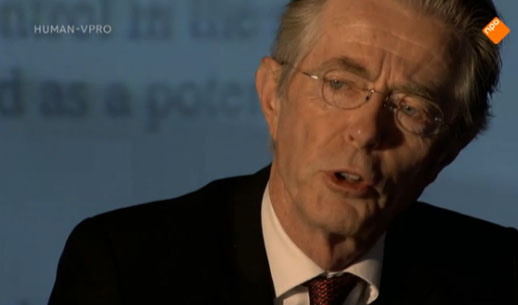
In a documentary aired on Monday, Mr Voorhoeve said a lot less than in 2005. However, he did add a hitherto unknown detail: according to him, the source of  the ‘prior knowledge’ was an important Serbian informant in Belgrade.

Here’s a translation of what Joris Voorhoeve said this week:

About 1.5 months after the fall of the enclave, by the end of August, I received a document from an allied intelligence service. It stated: “we have an important Serbian informant who told us by the end of May: ‘We Serbians will conquer the three eastern enclaves in Bosnia in a few weeks’ time.’ ” So, there was an ally with a certain degree of prior knowledge.  

I then asked the Ministry (of Defence, HdV): “find out who else may have had prior knowledge.'”The answer was that at least one other ally had knowledge about the Serbian plans. (…) This was not information about the mass murders, it was about the Serbian plans to conquer the enclaves. (original Dutch audio: click here

The presenter of the documentary then says: “This document shows it were the British and American intelligence services that knew about the Serbian plans. Information they did not share with The Hague, even though Dutch peacekeepers protected the enclave.” Shown is part of a document with a large part whitened out (see picture). It was signed by Brigadier J.F.C.  Knapp, who had become the head of the military intelligence service MID (now called MIVD) on 28 June 1995.

Document Srebrenica generaal Knapp

The text of this document says:

SUMMARY/CONCLUSIONS

20. The MID did not have prior knowledge nor concrete indications about an imminent large-scale attack against the enclave with the intent to conquer it.

Representatives of the CIA and DIS* told the MID after the fall of Srebrenica explicitly they had had confirmed data.  Likewise, the British and American political side denied there had been prior knowledge. 

This document denies there was US/British ‘confirmed prior knowledge’, while the makers of the documentary are adamant the two DID have such knowledge. It’s possible that Joris Voorhoeve told them so, as seems to have been the case in 2005. But doing so on the record would mean he breaks the Dutch secrecy laws to which he is still bound and could well end up in court.

The TV documentary did not address the question WHO the ‘important Serbian informant’ was. But it must have been a very important intelligence asset. Important enough not to risk destroying his or her cover by informing the Dutch government about the upcoming Serbian offensive. Also, as a declassified intelligence report shows, the UN military were aware of the offensive before it materialized. Or at least General Rupert Smith, the UNPROFOR commander in Bosnia was. A key paragraph of this document, dated 1 June 1995, by the US Interagency ‘Balkan Task Force‘. intel 2

The question is of course: did Rupert Smith keep this information to himself, or did he share it with his subordinates in Bosnia, in particular with the commanding officers of UNPROFOR ‘Sector East’? I have never come across information which could confirm that.  For the uninitiated, the US and UK have a particularly close intelligence cooperation governed by the ‘United Kingdom – United States of America Agreement’ (UKUSA). In principle, intelligence they gather is not shared with allied services, with the exception of the other members of the ‘FiveEyes‘: Australia, Canada, and New Zealand.

Milosevic Stojicic

Jovica Stanišić (middle)

As to the identity of the source in Belgrade, that is anybody’s guess. But there is an obvious candidate:  Jovica Stanišić, in 1995 head of Serbia’s secret service SDB (the successor of the notorious UDBA). The CIA has gone on the record to say that Mr Stanišić has been their agent in Belgrade during eight years. See for instance this article by the Los Angeles Times. As wingman of Serbian leader Slobodan Milošević, he had access to virtually all information of relevance to the US/UK.

*DIS = Defence Intelligence Staff  (military intelligent service of the UK)

Klik hier voor de Nederlandstalige versie van dit artikel

Geplaatst in (former) Yugoslavia, Verenigde Naties | Tags: , , , , , , , , , , | Plaats een reactie

Voorhoeve over voorkennis aanval op Srebrenica

Voormalig minister van Defensie Voorhoeve is maandag in een documentaire van Human-VPRO opnieuw ingegaan op de vraag of andere landen wellicht voorkennis hadden over de Servische aanval op Srebrenica in juli 1995. Eerder deed hij dat al in 2005 bij de IKON.

Voorhoeve zei nu aanzienlijk minder dan in 2005. Wel gaf hij een nieuw detail prijs: er was een informant in Belgrado:

Ik heb ongeveer anderhalve maand na de val van de enclave, augustus 1995 – het eind van die maand – een stuk in handen gekregen van een bondgenootschappelijke inlichtingendienst. Dat stuk beschreef: “wij hebben een belangrijke Servische informant* die ons eind mei heeft gezegd: ‘wij Serviërs gaan met een paar weken de drie oostelijke enclaves in Bosnië innemen.’ Er was dus een bondgenoot die over enige voorkennis beschikte. 

Toen heb ik het Ministerie gevraagd ‘zoek eens uit wie nog meer voorkennis zou kunnen hebben gehad.’  Daar kwam uit dat minstens nog één andere bondgenoot inzicht had in de Servische plannen. (..) Dan moeten we daar wel zorgvuldig mee omgaan, het was geen informatie over plannen voor massamoorden. Het was informatie over Servische plannen om de enclaves te gaan innemen. “[Audio van deze uitspraken: klik hier]

Hierna zegt de presentator: Uit dit document blijkt dat het de Britse en de Amerikaanse inlichtingendiensten waren die wisten van de Servische plannen. Informatie die zij niet deelden met Den Haag terwijl Nederlandse blauwhelmen de enclave beschermden.”

Tijdens deze twee zinnen is een deel van een document in beeld dat ondertekend is door brigadegeneraal J.C.F. Knapp, vanaf 28 juni 1995 Hoofd van de Militaire Inlichtingendienst MID. De tekst:

Samenvatting/Conclusie

20. De MID beschikte niet vooraf over inlichtingen of concrete aanwijzingen over een op handen zijnde grootscheepse Bosnisch-Servische aanval op de enclave met als doel deze in te nemen.

                                                         Vertegenwoordigers van CIA en de Britse DIS** hebben na de val van Srebrenica tegenover de MID uitdrukkelijk ontkend dat men over bevestigde gegevens beschikte. Ook van Britse en Amerikaanse politieke zijde is tegengesproken dat men hierover voorkennis heeft gehad.

Hoofd Militaire Inlichtingendienst

mr. J.C.F. Knapp

Hoe Human-VPRO in hun documentaire de sprong maken van de tekst van dit MID-document naar: “de Britse en de Amerikaanse inlichtingendiensten (…) wisten van de Servische plannen” is mij een raadsel. Zou Voorhoeve het hen hebben ingefluisterd, net als hij dat volgens mij in 2005 bij de IKON deed? Toen refereerde hij tot tweemaal toe aan zijn geheimhoudingsplicht als oud-minister.

Document Srebrenica generaal Knapp

*Wie deze ‘belangrijke informant’ was heeft Voorhoeve niet gezegd. Maar het zou kunnen gaan om Jovica Stanišić, onder Milošević hoofd van de Servische staatsveiligheidsdienst SDB (de opvolger van de beruchte UDBA). De CIA heeft later on the record bevestigd (o.a. aan het Joegoslaviëtribunaal) dat Stanišić acht jaar lang een agent van de dienst was.  Zie ook dit artikel uit de Los Angeles Times + het bijbehorende kadertje dat hier te vinden is.

Milosevic Stojicic

Stanišić (midden) en Milošević

Hardop speculerend is het begrijpelijk dat de CIA informatie die de dienst van Stanišić kreeg met de uiterste voorzichtigheid behandelde om te voorkomen dat hun topagent in Belgrado tegen de lamp zou lopen. Dat zou ook verklaren waarom Groot-Brittannië wél de waarschuwing van Stanišić over een Servisch offensief tegen de oostelijke enclaves in Bosnië kreeg, en Nederland niet.

Groot-Brittannië was en is namelijk lid van de Five Eyes, het samenwerkingsverband van de inlichtingendiensten van de VS, het VK, Canada, Australië en Nieuw-Zeeland. Dit verband houdt de kaarten altijd zeer dicht tegen de borst. Daarnaast wist de CIA eind mei 1995 dat de VN-vredemacht UNPROFOR bij monde van generaal Rupert Smith al had gewaarschuwd voor een Servisch offensief tegen de enclaves.  Zie onderstaand details uit  het vrijgegeven document DCI Interagency Balkan Task Force 1 June 1995

intel 2

Een van de vele nog niet-beantwoorde vragen: heeft generaal Smith deze informatie doorgegeven aan zijn UNPROFOR-ondergeschikten, met name aan de bevelhebber voor de Sector Oost en de onderbevelhebbers in de enclaves Srebrenica (=Karremans), Zepa en Gorazde? Wanneer is dat gebeurd? Welke stappen heeft Smith verder genomen? 

**DIS = Defence Intelligence Staff. In 2010 veranderde deze dienst van het Britse ministerie van Defensie van naam tot DI (Defence Intelligence).

De volledige Human-VPRO documentaire ‘Waarom Srebrenica moest vallen’ staat online. Klik hier.

This story in English: Srebrenica: US, UK had a ‘Deep Throat’ in Belgrade

UPDATE 2 juli: de NRC schrijft vandaag: ‘Iets anders is of de inname van de enclave te voorzien was geweest en of de Amerikanen wisten van de aanvalsplannen. De vrijgegeven documenten suggereren dit. Nederland is hiervan niet op de hoogte gesteld. Ook hierover wil Hennis opheldering van de bondgenoten. Voorhoeve meent dat Nederland zich bij het inlichtingenwerk had geïsoleerd door niet mee te werken aan verzoeken van bijvoorbeeld de CIA. Den Haag koesterde de neutrale rol als deel van een VN-vredesmacht.

Kijk, dat zou veel verklaren. Inlichtingenwerk is gebaseerd op het principe van eerlijk delen: voor iets hoort iets. Met dure woorden: quid pro quo. Maar Nederland had zich kennelijk aan dat spel ontrokken. En werd dus door eígen toedoen geen deelgenoot gemaakt van mogelijk cruciale informatie…

Geplaatst in (former) Yugoslavia, Verenigde Naties | Tags: , , , , , , | 1 reactie

Koenders: “Niets bekend over plaatsing nieuwe kernwapens VS in Europa”

[Minister Koenders van Buitenlandse Zaken tijdens een Kamerdebat, 25 juni 2015]

“Uit contacten met de VS-regering is de Nederlandse regering niets bekend over plaatsing van nieuwe kernwapens in Europa. Ik herken de berichtgeving in de media daarover helemaal niet. ”

“Mij is geen enkel plan bekend voor de installatie van tactische kernwapens in Europa door de Verenigde Staten.”

Geplaatst in NAVO, Rusland, Verenigde Staten | Tags: | Plaats een reactie

NATO strengthens its Response Force

Stoltenberg

Jens Stoltenberg

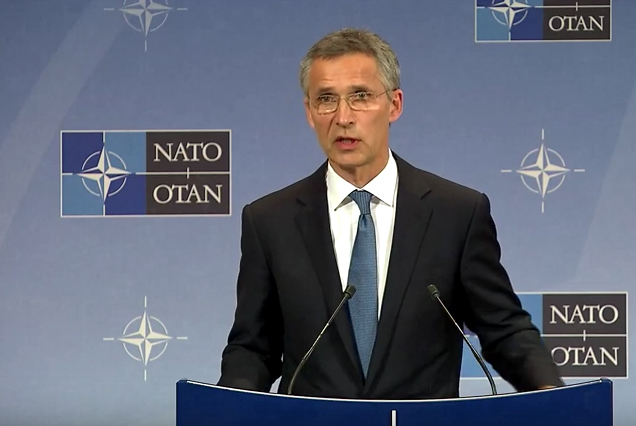
NATO Secretary-General Jens Stoltenberg, press briefing after day 1 of the meeting of deference ministers, 24 June 2015. Verbatim text:

– “First, we decided to increase further  the strength and capability of the NATO Response Force, including its Air, Maritime and Special Operations components. All together the enhanced NATO Response Force will consist of up to 40,000 personnel. This represents a substantial increase from the previous level of 13,000*.

– “Second, we took measures to speed up our political and military decision making, while maintaining political control. This includes the authority for our Supreme Commander (SACEUR) to alert, stage, and prepare our troops to be ready to go once the political decision is made. We also approved a new concept of advance planning. Detailed advance planning and rapid decision making are two sides of the same coin. They mean we are able to respond more rapidly and more effectively to threats, wherever they may come from.

– “Third, we finalized the size and composition of the six small headquarters we are setting up in Bulgaria, Estonia, Latvia, Lithuania, Poland and Romania. They will each consist of around 40 people and will play a key role in planning exercises and assisting potential reinforcements. We will also consider setting up more such headquarters in other NATO countries. Several allies have offered during the meeting to host such small headquarters.

– “Finally, we have decided to set up a new Standing Joint Logistic Headquarters. This will enable us to move forces faster across the territory of our alliance with the necessary supplies, equipment and transportation.

“All these steps will contribute to a far-reaching adaptation of NATO’s military posture in response to the changed security environment. At the same time, we are carefully addressing the implications of what Russia is doing, including its nuclear activities. And we are also developing how we deal with hybrid threats, including by working closely with the European Union.

“Let me be clear: we do not seek confrontation. And we do not want a new arms race. We want to keep our nations safe. And faced with many challenges from many directions, we need to be prepared. This is our job, we have already achieved a lot.  Our Interim Very High Readiness Force, led by Germany, the Netherlands and Norway is now operational. We saw it in action in western Poland just last week. Next year, this spearhead force, led by Spain, would be available to respond rapidly to any contingency.  All together, seven allies will assume the lead of this new force in the coming years.

“I welcome the significant announcements made by the U.S. Secretary of Defense, Ash Carter, on the prepositioning of U.S. equipment and the substantial enabler support for our High Readiness Forces, including transport aircraft, air-to-air refuelling, Special Forces, intelligence, surveillance and reconnaissance. Together with the wide-ranging contribution of European allies, and the further offers of enablers and forces we heard today, the American commitment completes the picture of a truly transatlantic effort to reinforce our collective defence.

“All our efforts to adapt the alliance must be funded. In Wales, allies made a serious commitment to increase defence spending over the coming decade. We assessed initial progress during our meeting today. The picture is mixed. While some progress has been made, we need to see more. I welcome that every single ally stressed the importance of this pledge, and outlined the steps they are taking to meet the pledge.

“We also took important decision to support partners. We have endorsed the Defence Capacity Building package to help Moldova to enhance its defence and security institutions. We look forward to finalising as soon as possible NATO’s defence capacity building support to Iraq as well.

* [The original strength of the NATO Response Force was 25,000. This was later reduced to 13,000 as allies said they could not earmark such high numbers of troops for the NRF, HdV]

Geplaatst in NAVO | Tags: , , , , , , , | Plaats een reactie

Is Europa Poetin’s ‘achtertuin’?

Ja, zeggen de Volkskrant en het Nederlands Dagblad. De Volkskrant begon er zaterdag mee, met een artikel getiteld ‘Tijd voor een grootscheepse oefening in de achtertuin van Poetin’. De Volkskrant schreef: ‘Nu de dreiging uit het oosten als steeds reëler wordt ervaren, vindt de NAVO het tijd voor een grootscheepse oefening in de achtertuin van Poetin’. En verderop in het artikel: ‘Tot woede van Moskou wordt er wel tijdelijk geoefend met NAVO-militairen in de achtertuin van Poetin.’ Het Nederlands Dagblad nam dit artikel later 1:1 over.

Het oefenen gebeurt  op vier locaties. In de Oostzee, waar de jaarlijkse BALTOPS marinie-oefening wordt gehouden. In de Baltische landen oefening SABRE STRIKE. In Polen, waar op een oefenterrein bij de Duitse grens de nieuwe ‘flitsmacht’ VJTF onder andere met Nederlandse militairen oefent (NOBLE JUMP).  En in Roemenië, Hongarije en Italië (oefening TRIDENT JOUST). Welke van die vier locaties de Volkskrant precies ‘de achtertuin van Poetin’ noemt wordt uit het artikel niet duidelijk. Ze worden kennelijk op een hoop geveegd.

Ik weet niet hoe het u vergaat, maar op mij kwam een en ander uiterst merkwaardig over. Ik bedoel, de EU en NAVO tot ‘achtertuin van Europa’ bombarderen? Idem voor wat betreft de Oostzee? Dit is het onversneden overnemen van Russische propaganda. Het woord ‘achtertuin’ impliceert ook dat Moskou iets te zeggen zou hebben over wat er in die landen en op de Oostzee gebeurt. Wat natuurlijk niet het geval is.

En het zou eerlijk gezegd logischer zijn om juist Rusland ‘de achtertuin van Europa’ te noemen. De EU en de Europese NAVO-landen hebben meer inwoners, een vele malen groter bruto nationaal product, en hebben gezamenlijk een aanzienlijk grotere militaire macht. Op één uitzondering na, de kernwapens (alleen Frankrijk en Groot-Brittannië hebben zelf ook kernwapens, de rest schuilt onder de Amerikaanse atoomparaplu)

Toen ik de auteur van het artikel in de Volkskrant, Natalie Righton, op Twitter over aansprak over de ‘achtertuin-formulering reageerde ze als gebeten door een hond. Tot een zinvolle discussie kwam het niet. Enfin. Hier de relevante citaten uit het artikel.

‘Tijd voor een grootscheepse oefening in de achtertuin van Poetin

Nu de dreiging uit het oosten als steeds reëler wordt ervaren, vindt de NAVO het tijd voor een grootscheepse oefening in de achtertuin van Poetin. ‘Een levensgevaarlijk spel.’

door: Natalie Righton 13 juni 2015, 02:00

(…)

Dat Rusland echt een bedreiging is, vrezen NAVO-lidstaten vooral sinds de annexatie van de Krim. De Baltische staten vrezen hetzelfde lot en dringen regelmatig aan op de permanente legering van NAVO-troepen op hun grondgebied. Voor de meeste lidstaten gaat dat te ver. Rusland zou het als een ultieme provocatie zien, met mogelijk een oorlog als gevolg.

Tot woede van Moskou wordt er wel tijdelijk geoefend met NAVO-militairen in de achtertuin van Poetin. Rusland is misschien niet zo onder de indruk van het aantal NAVO-militairen dat komende week op de been is – Moskou oefent zelf met tienduizenden soldaten tegelijk – maar de locatie is wel olie op het vuur.

(…)’

(Het volledige artikel staat hier)

UPDATE: De Volkskrant heeft zich door minister Hennis laten uitleggen dat je niet moet meegaan in de strategische communicatie van Poetin, bijvoorbeeld door Oost-Europa de ‘achtertuin’ van Rusland te noemen, en NAVO-oefeningen daar ‘olie op het vuur’.

‘Hennis reageert fel op kritiek dat deze NAVO-oefening nabij de Russische grens als provocatie wordt gezien door Moskou. ‘Als we ons laten verleiden om mee te gaan in de strategische communicatie van Poetin, dan zijn we precies waar hij ons wil hebben. Wat de NAVO doet is puur defensief van aard, ter geruststelling van de eigen bondgenoten. Van agressief of aanvallend gedrag is geen sprake.”

(bron)

NATO-ALLIED-SHIELD

Geplaatst in Uncategorized | Tags: , | Plaats een reactie

President Putin on the ‘genetic code’ of Russian people

(Fragment from the annual phone-in with the Russian president, 17 April 2014)

Vladimir Putin: I thought for a long while about whether to answer this question at all. It is not a question that would fit in a blitz Q&A section. This is a philosophical question. I’ll read it out. This question was asked by Yekaterina Shcherbonos from St Petersburg: “I’m asking you as a politician but I’d like to hear your personal rather than political opinion. What is the Russian people to you? By virtue of your position you’ve probably been to all countries of the world. You’ve seen a tremendous number of nations and ethnic groups and learned about their cultural traditions, national habits, cuisine and arts. In this context I’d like to ask you: In your opinion, what does it mean to be Russian? What do you think about their pluses and minuses, their weaknesses and strengths?”

Well, some specialists believe that the people as a community do not have specific features, that only individuals have them. I find it hard to accept this position because if people are using the same language, live in a common state, on a common territory with a certain climate, if they have common cultural values and history, they are bound to have some common features.

As for our people, our country, like a magnet, has attracted representatives of different ethnic groups, nations and nationalities. Incidentally, this has become the backbone not only for our common cultural code but also a very powerful genetic code, because genes have been exchanged during all these centuries and even millennia as a result of mixed marriages.

And this genetic code of ours is probably, and in fact almost certainly, one of our main competitive advantages in today’s world. This code is very flexible and enduring. We don’t even feel it but it is certainly there.

So what are our particular features? We do have them, of course, and I think they rely on values. It seems to me that the Russian person or, on a broader scale, a person of the Russian world, primarily thinks about his or her highest moral designation, some highest moral truths. This is why the Russian person, or a person of the Russian world, does not concentrate on his or her own precious personality…

Of course, in everyday life we all think about how to live a wealthier and better life, to be healthier and help our family, but these are still not the main values. Our people open themselves outward. Western values are different and are focused on one’s inner self. Personal success is the yardstick of success in life and this is acknowledged by society. The more successful a man is, the better he is.

This is not enough for us in this country. Even very rich people say: “Okay, I’ve made millions and billions, so what next?” At any rate, everything is directed outward, and oriented toward society. I think only our people could have come up with the famous saying: “Meeting your death is no fear when you have got people round you.” How come? Death is horrible, isn’t it? But no, it appears it may be beautiful if it serves the people: death for one’s friends, one’s people or for the homeland, to use a modern word.

These are the deep roots of our patriotism. They explain mass heroism during armed conflicts and wars and even sacrifice in peacetime. Hence there is a feeling of fellowship and family values. Of course, we are less pragmatic, less calculating than representatives of other peoples, and we have bigger hearts. Maybe this is a reflection of the grandeur of our country and its boundless expanses. Our people have a more generous spirit.

I don’t want to offend anyone by saying this. Many peoples have their own advantages but this is certainly ours. An intensive genetic, informational and cultural exchange is going on in the modern world. There is no doubt that other peoples have precious and useful things that we can borrow, but we have relied for centuries on our own values, which have never let us down and will stand us in good stead in the future.

Thank you very much. (Applause.)

(Source)

Original text:

И, наконец, знаете, я долго думал, брать ли этот вопрос вообще. Он такой, не для блиц-ответов и блиц-вопросов, он совсем философский, я его зачитаю. «Спрашиваю у Вас как у политика, – это как раз из Питера, Щербонос Екатерина Александровна задаёт вопрос. – Но слышать хотелось бы Ваше личное, не политическое мнение. Русский народ, он что для Вас? Вы по роду своей деятельности побывали, наверное, во всех странах мира. Вы видели огромное количество наций, народностей, познакомились с их культурными традициями, национальными обычаями, кухней, искусством. И в связи с этим мой вопрос к Вам: что для Вас есть русский человек, русский народ? На Ваш взгляд, его плюсы и минусы, сильные и слабые стороны?»

Знаете, некоторые специалисты считают, что у народа как у общности людей нет своих особенностей, особенности есть только, по их мнению, у конкретного человека. Мне трудно согласиться с этой позицией, потому что если люди пользуются одним языком, живут в рамках единого государства, проживают на одной территории, у них общие культурные ценности, у них общая история, в конце концов, они живут в рамках какой‑то территории с определённым климатом, – ну не может не быть каких‑то общих черт.

А что касается нашего народа, то страна наша, как пылесос, втягивала в себя представителей различных этносов, наций, национальностей. Кстати говоря, на этой основе создан не только наш общий культурный код, но и исключительно мощный генетический код, потому что за все эти столетия и даже тысячелетия происходил обмен генами, смешанные браки. И именно этот наш генный код, наверное, может быть, почти наверняка является одним из наших главных конкурентных преимуществ в сегодняшнем мире. Он очень гибкий, он очень устойчивый. Мы даже этого не чувствуем, но это наверняка есть.

Что же всё‑таки в основе наших особенностей? Эти особенности, конечно, есть, и в их основе, на мой взгляд, лежат ценностные ориентиры. Мне кажется, что русский человек, или, сказать пошире, человек русского мира, он прежде всего думает о том, что есть какое‑то высшее моральное предназначение самого человека, какое‑то высшее моральное начало. И поэтому русский человек, человек русского мира, он обращён больше не в себя, любимого…

Хотя, конечно, в бытовой жизни мы все думаем о том, как жить богаче, лучше, быть здоровее, помочь семье, но всё‑таки не здесь главные ценности, он развёрнут вовне. Вот западные ценности заключаются как раз в том, что человек в себе сам, внутри, и мерило успеха – это личный успех, и общество это признаёт. Чем успешнее сам человек, тем он лучше.

У нас этого недостаточно. Даже очень богатые люди всё равно говорят: «Ну заработал миллионы и миллиарды, дальше что?» Всё равно это развёрнуто вовне, в общество. Мне кажется, ведь только у нашего народа могла родиться известная поговорка: «На миру и смерть красна». Как это так? Смерть – это что такое? Это ужас. Нет, оказывается, на миру и смерть красна. Что такое «на миру»? Это значит, смерть за други своя, за свой народ, говоря современным языком, за Отечество.

Вот в этом и есть глубокие корни нашего патриотизма. Вот отсюда и массовый героизм во время военных конфликтов и войн и даже самопожертвование в мирное время. Отсюда чувство локтя, наши семейные ценности. Конечно, мы менее прагматичны, менее расчётливы, чем представители других народов, но зато мы пошире душой. Может быть, в этом отражается и величие нашей страны, её необозримые размеры. Мы пощедрее душой.

Я никого не хочу при этом обидеть. Ведь у многих народов есть свои преимущества, но это, безусловно, наше. В современном глобальном мире происходит интенсивный обмен: и генетический обмен, и информационный, и культурный, и нам, безусловно, есть что взять у других народов ценного и полезного, но мы всегда, сотнями лет опирались на свои ценности, они нас никогда не подводили, и они нам ещё пригодятся.

Спасибо вам большое. (Аплодисменты.)

Geplaatst in Russian Federation | Tags: , , , , | Plaats een reactie

G7: Foreign policy and Security in the 2015 Leaders’ Declaration

Foreign Policy

Acting on Common Values and Principles
We, the G7, emphasise the importance of freedom, peace and territorial integrity, as well as respect for international law and respect for human rights. We strongly support all efforts to uphold the sovereign equality of all States as well as respect for their territorial integrity and political independence. We are concerned by current conflicts which indicate an erosion of respect for international law and of global security.
Based on our common values and principles we are committed to:

Finding a Solution to the Conflict in Ukraine
We reiterate our condemnation of the illegal annexation of the Crimean peninsula by the Russian Federation and reaffirm our policy of its non-recognition.
We reiterate our full support for the efforts to find a diplomatic solution to the conflict in eastern Ukraine, particularly in the framework of the Normandy format and the Trilateral Contact Group. We welcome the OSCE’s key role in finding a peaceful solution. We call on all sides to fully implement the Minsk agreements including the Package of Measures for their implementation signed on 12 February 2015 in Minsk, through the established Trilateral Contact Group and the four working groups. We are concerned by the recent increase in fighting along the line of contact; we renew our call to all sides to fully respect and implement the ceasefire and withdraw heavy weapons. We recall that the duration of sanctions should be clearly linked to Russia’s complete implementation of the Minsk agreements and respect for Ukraine’s sovereignty. They can be rolled back when Russia meets these commitments. However, we also stand ready to take further restrictive measures in order to increase cost on Russia should its actions so require. We expect Russia to stop trans-border support of separatist forces and to use its considerable influence over the separatists to meet their Minsk commitments in full.

We commend and support the steps the Ukrainian government is taking to implement comprehensive structural reforms and urge the Ukrainian leadership to decisively continue the necessary fundamental transformation in line with IMF and EU commitments. We reaffirm our commitment to working together with the international financial institutions and other partners to provide financial and technical support as Ukraine moves forward with its transformation. We ask the G7 Ambassadors in Kiev to establish a Ukraine support group. Its task will be to advance Ukraine´s economic reform process through coordinated advice and assistance.

Lees verder

Geplaatst in Uncategorized | Tags: , , , , | Plaats een reactie